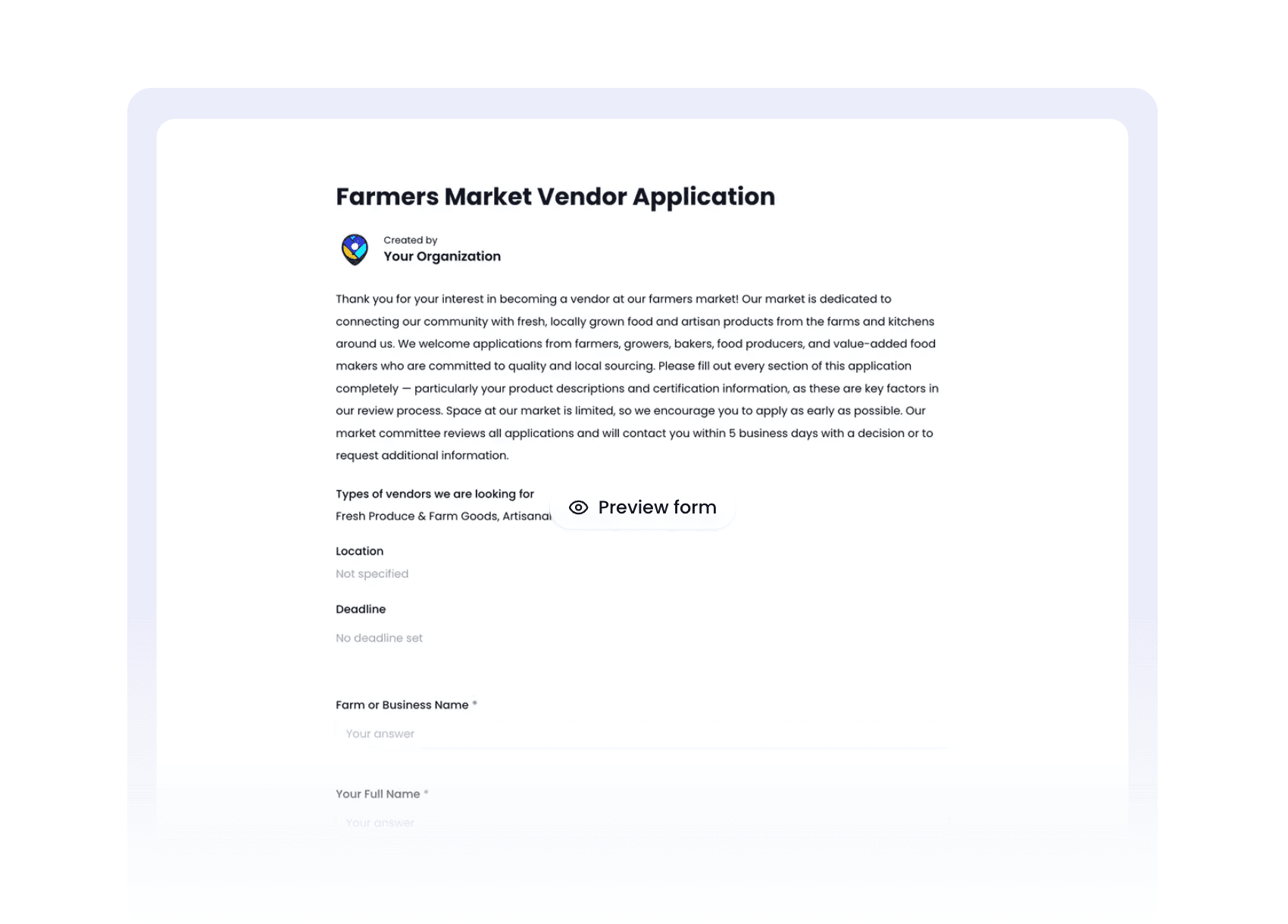
Running a successful farmers market starts long before opening day. One of the most critical tools in your arsenal is a well-crafted vendor application. This document serves as your first line of quality control, helping you attract the right vendors while screening out those who don't fit your market's vision.
Whether you're launching a new market or improving an existing one, this comprehensive guide will walk you through creating a vendor application that works.
Why Your Vendor Application Matters
Your vendor application isn't just paperwork—it's a strategic tool that shapes your market's success. A thoughtfully designed application helps you:
- Attract serious, professional vendors who will enhance your market
- Collect all necessary information upfront to streamline decision-making
- Set clear expectations before vendors commit
- Ensure legal compliance and proper documentation
- Create a fair, transparent selection process
- Build a curated mix of products that serves your customer base
Markets with strong applications tend to have lower vendor turnover, fewer conflicts, and better overall reputation. It's worth investing time to get this right.
Essential Sections Every Vendor Application Needs
Business Information
Start with the basics. You need to know who you're dealing with and how to contact them.
- Business name (legal name and DBA if applicable)
- Owner/operator name(s)
- Mailing address
- Phone number (primary and backup)
- Email address
- Website and social media handles
- Business structure (sole proprietor, LLC, corporation)
- Tax ID or EIN
- Years in business
Product Information
This section helps you understand what the vendor sells and whether they fit your market's needs and rules.
- Primary product category (produce, prepared food, crafts, etc.)
- Detailed list of all products they plan to sell
- Product sourcing—are items grown, made, or resold?
- Production location and methods
- Seasonal availability (what's available when?)
- Price range for products
- Photos of products (require 3-5 high-quality images)
Ask vendors to specify what percentage of their products they produce themselves. This helps enforce producer-only policies if your market has them.
Certifications and Compliance
Legal requirements vary by location and product type. Gather documentation upfront to avoid issues later.
- Business license (copy required)
- Sales tax permit or reseller certificate
- Liability insurance (certificate of insurance required)
- Health department permits (for food vendors)
- Cottage food registration (if applicable)
- Organic certification (if claiming organic)
- Food handler certifications
- Kitchen inspection certificates
Include checkboxes for each requirement and clearly state which documents must be submitted with the application. Make copies mandatory, not optional.
Booth and Setup Requirements
Understanding each vendor's setup needs helps with market layout planning and ensures professional presentation.
- Booth size needed (10x10, 10x20, etc.)
- Tent/canopy details (size, color, professional appearance)
- Tables, displays, and signage description
- Electricity needs (specify wattage if needed)
- Water access requirements
- Special setup needs (heavy equipment, vehicle access)
- Photos of booth setup at other events
Market Participation Details
Get clarity on their commitment level and availability.
- Which market dates they're applying for (full season vs. specific dates)
- Preferred booth location (corner, end cap, specific area)
- Will the same person staff the booth each week?
- Participation at other markets (which ones, which days)
- Backup plan if primary vendor is sick or unavailable
Vendor Statement and Policies
Include a section where vendors acknowledge and agree to your market rules. This creates accountability and reduces disputes.
- Agreement to follow all market rules and regulations
- Acknowledgment of fee structure and payment terms
- Understanding of cancellation and no-show policies
- Commitment to setup and breakdown times
- Agreement to maintain clean, professional booth appearance
- Acceptance of market manager decisions as final
- Release of liability (consult legal counsel for language)
Have vendors sign and date this section. Consider having them initial each major policy point.
Questions That Help You Select Better Vendors
Beyond basic information, include questions that reveal vendor quality and fit:
Open-Ended Questions to Include
- "Tell us about your business and what makes your products unique."
- "Why do you want to sell at our market specifically?"
- "Describe your customer service philosophy."
- "What other markets have you participated in? May we contact them as references?"
- "How do you handle product quality issues or customer complaints?"
- "What are your goals for participating in our market?"
These questions help you identify vendors who are thoughtful about their business and aligned with your market's values.
Red Flag Questions
Include questions designed to uncover potential problems:
- "Have you ever been asked to leave a market? If so, explain."
- "Do you have any pending health department violations?"
- "Have you had any liability claims related to your products?"
- "Are there any reasons you might not be able to maintain consistent attendance?"
Structuring Your Fee Information
Clearly present all costs associated with participation. Transparency prevents misunderstandings.
- Application fee (non-refundable, typically $25-50)
- Seasonal booth fee (full season commitment)
- Daily booth fee (for occasional vendors)
- Electricity fee (if applicable)
- Payment schedule and accepted methods
- Late payment penalties
- Refund policy for withdrawals
Consider offering tiered pricing: lower rates for full-season commitments, higher daily rates for occasional vendors. This encourages consistency.
Digital vs. Paper Applications
Modern markets increasingly use digital applications. Here's a comparison:
Benefits of Digital Applications
- Easier to organize and search submitted applications
- Automatic collection of required documents
- Built-in payment processing for application fees
- Email confirmations and status updates
- Accessible from anywhere for review committee
- Environmental sustainability
When Paper Still Works
- Markets serving vendors without reliable internet access
- Very small markets with few vendors
- Communities where personal relationships drive participation
Popular digital tools include Google Forms (free), JotForm, Typeform, and specialized market management software like ManageMyMarket.
Creating a Fair Review Process
A good application is only valuable if you have a fair process for reviewing submissions.
- Establish clear criteria for acceptance before reviewing any applications
- Use a scoring rubric to evaluate each application consistently
- Have multiple reviewers to reduce bias
- Consider blind review (remove identifying information for initial scoring)
- Document reasons for all decisions (acceptance and rejection)
- Communicate decisions promptly and professionally
Sample Scoring Criteria
- Product quality and uniqueness (1-10)
- Completeness of application (1-10)
- Professional presentation (1-10)
- Fit with market's product mix (1-10)
- References and reputation (1-10)
- Compliance documentation complete (yes/no)
Common Mistakes to Avoid
- Asking for too little information and regretting it later
- Making the application so long that good vendors don't finish it
- Not requiring documentation upfront (chasing paperwork is exhausting)
- Unclear policies that lead to disputes
- No deadline or rolling acceptance (creates chaos)
- Forgetting to ask for photos (you need to see their products and setup)
- Not having vendors acknowledge rules in writing
Template Checklist for Your Application
Use this checklist to ensure your application covers everything:
- Contact and business information section
- Product details and photos requirement
- All relevant certifications and permits listed
- Insurance requirement with certificate deadline
- Booth setup and equipment details
- Participation preferences and availability
- Fee structure clearly outlined
- Market rules acknowledgment with signature line
- Liability waiver (reviewed by attorney)
- Deadline for submission clearly stated
- Instructions for submitting documents
After the Application: Communication Matters
How you handle applications after submission affects your market's reputation:
- Send confirmation when application is received
- Provide timeline for when decisions will be made
- Follow up on missing documents promptly
- Notify all applicants of decisions (not just accepted ones)
- Offer constructive feedback to rejected applicants when possible
- Welcome accepted vendors with next steps and important dates
Build Your Vendor Community with Events Near Me
Creating a great vendor application is just the first step in building a thriving market. Once you've assembled your vendor roster, help them succeed by listing your market on Events Near Me. Our platform connects markets with vendors actively seeking opportunities, helping you fill gaps and maintain a waiting list of quality applicants.
A professional vendor application process signals to vendors that your market is well-run and worth their investment. Take the time to build it right, and you'll attract vendors who share your commitment to excellence.
Final Thoughts
Your vendor application is more than a form—it's the foundation of your market's quality and culture. A well-designed application attracts professional vendors, sets clear expectations, and gives you the information needed to curate a successful market.
Review and update your application annually based on lessons learned. Ask vendors for feedback on the process. Continuously improve, and your market will thrive.