A well-designed craft fair vendor application helps you find the right artisans for your event while making the process easy for everyone. The key is asking the right questions, keeping it simple, and collecting the information you actually need. This guide walks you through creating an application that works for both organizers and vendors.
Why Your Application Design Matters
Your vendor application is often the first interaction crafters have with your event. A confusing or overly long form can turn away talented artisans. A clear, professional application shows vendors that you run a well-organized market.
Good applications also save you time. When you collect the right information upfront, you spend less time emailing back and forth with vendors. You can make faster decisions about who gets a booth.
Essential Information to Collect on Your Craft Fair Vendor Application
Every craft fair vendor application needs certain basic details. Start with these must-have fields:
Contact Information
- Business name
- Vendor name
- Email address
- Phone number
- Website or social media links
Product Details
- What they sell (product categories)
- Whether items are handmade, vintage, or commercially produced
- Brief product description
- Price range of items
Booth Requirements
- Space size needed
- Electricity requirements
- Special setup needs
Experience and Photos
- Links to product photos or portfolio
- List of other markets they've attended
- References (optional)
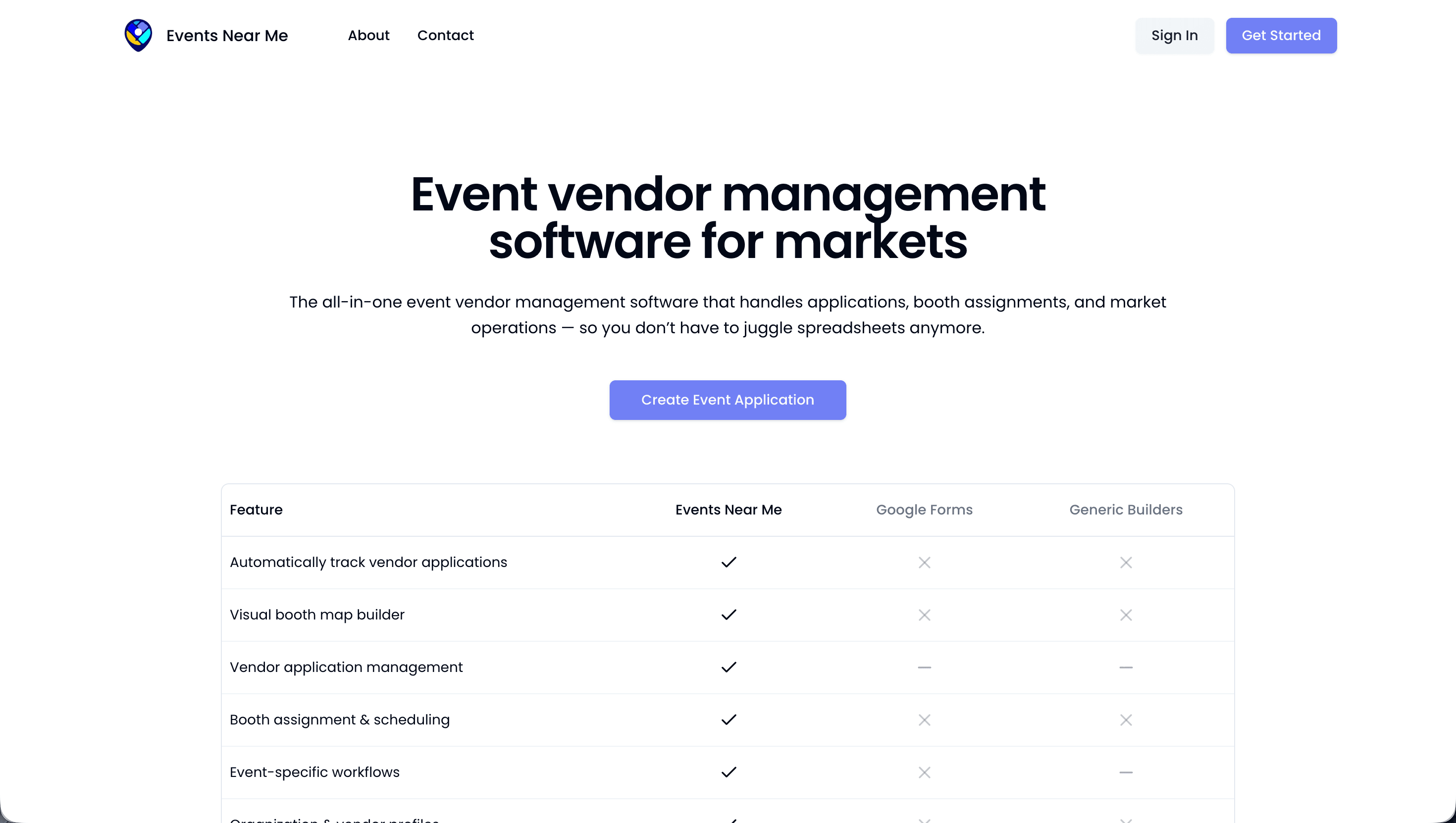
Using vendor management software can help you collect and organize all this information in one place.
How to Structure Your Craft Fair Application Form
The best applications follow a logical flow. Group related questions together so vendors don't feel overwhelmed.
Section 1: About the Vendor
Start with basic contact and business information. This is easy for applicants to fill out and gets them into the flow of completing the form.
Section 2: Products and Craft Type
This is the heart of your application. Ask detailed questions about what vendors make and sell. Include:
- Primary product category (jewelry, pottery, woodwork, etc.)
- Materials used
- Production method (handmade, designed and manufactured, etc.)
- Photos of products and booth setup
Many organizers who list their markets on Events Near Me find that requiring photos helps them curate a better mix of vendors.
Section 3: Logistics
Cover the practical details:
- Booth size preference
- Load-in and load-out times that work for them
- Electricity or water needs
- Tent or table requirements
Section 4: Agreement and Payment
End with your rules, fees, and payment collection. Make sure vendors acknowledge your policies before submitting.
Tips for Designing a User-Friendly Application
Keep these best practices in mind when building your form:
Keep it short. Only ask what you truly need. A 50-question application will scare away good vendors. Aim for 15-20 questions maximum.
Use clear language. Write questions at a basic reading level. Avoid jargon that new vendors might not understand.
Make it mobile-friendly. Many vendors will fill out your application on their phones. Test your form on mobile devices.
Offer multiple choice when possible. Dropdown menus and checkboxes are faster to complete than open text fields.
Save progress. If your form is longer, let vendors save their work and return later.
Send confirmation emails. Vendors should know their application was received. Automatic confirmations build trust.
Platforms like Events Near Me offer built-in application tools that handle all of these features automatically.
What to Include in Your Application Instructions
Before vendors start filling out your form, give them important context:
- Application deadline
- Event date, location, and hours
- Booth fees and what's included
- How and when you'll notify accepted vendors
- Any restrictions (no MLM products, handmade only, etc.)
- Photos required and preferred format
Clear instructions reduce confusion and help you receive complete applications the first time.
How to Review Craft Fair Vendor Applications
Once applications come in, you need a system to evaluate them fairly. Consider creating a scoring rubric that looks at:
- Product quality (based on photos)
- Fit with your market's theme or style
- Price point diversity
- Uniqueness compared to other applicants
- Vendor experience and professionalism
Spreadsheets work for small events, but as your craft fair grows, vendor management features can help you sort, filter, and communicate with applicants more easily.
Common Mistakes to Avoid
When designing your craft fair vendor application, watch out for these pitfalls:
- Asking for too much too soon. Don't request detailed insurance documents in the initial application. Wait until vendors are accepted.
- Vague questions. "Tell us about your business" is too open-ended. Be specific about what you want to know.
- No photo requirements. Without product photos, you're accepting vendors blind.
- Forgetting mobile users. Always test your form on a phone.
- Slow response times. Vendors apply to multiple events. Respond quickly or lose good crafters to other markets.
Using Online Tools to Manage Applications
Paper applications and email submissions create extra work. Online application systems let you:
- Collect payments with applications
- Automatically organize submissions
- Send bulk emails to applicants
- Track who's been accepted or waitlisted
- Store vendor information for future events
When you search for events on Events Near Me, you'll notice that well-organized markets often use digital tools to manage their vendor applications.
FAQ
How long should a craft fair vendor application be?
Keep applications to 15-20 questions. You can always request more details after accepting vendors. Long applications discourage talented artisans from applying.
Should I charge an application fee?
Most craft fairs don't charge application fees separate from booth fees. If you do, keep it small ($5-10) to cover administrative costs. Higher fees may reduce your applicant pool.
When should I open applications?
Open applications 3-4 months before your event. This gives vendors time to plan their schedule and gives you time to review submissions carefully.
How do I handle more applications than booth spaces?
Create a waitlist and let applicants know their status. Focus on variety—you want different product types rather than five jewelry vendors selling similar items.
Can I reject vendors who applied last year?
Yes. Your goal is curating the best market possible. Be professional and kind in rejection emails, and consider offering feedback if asked.
Start Building Your Vendor Application Today
A thoughtful craft fair vendor application sets the tone for your entire event. Take time to design a form that's easy to complete, collects the information you need, and presents your market professionally.
Ready to simplify your vendor management? Discover how Events Near Me can help you create applications, organize vendors, and promote your craft fair—all in one place.