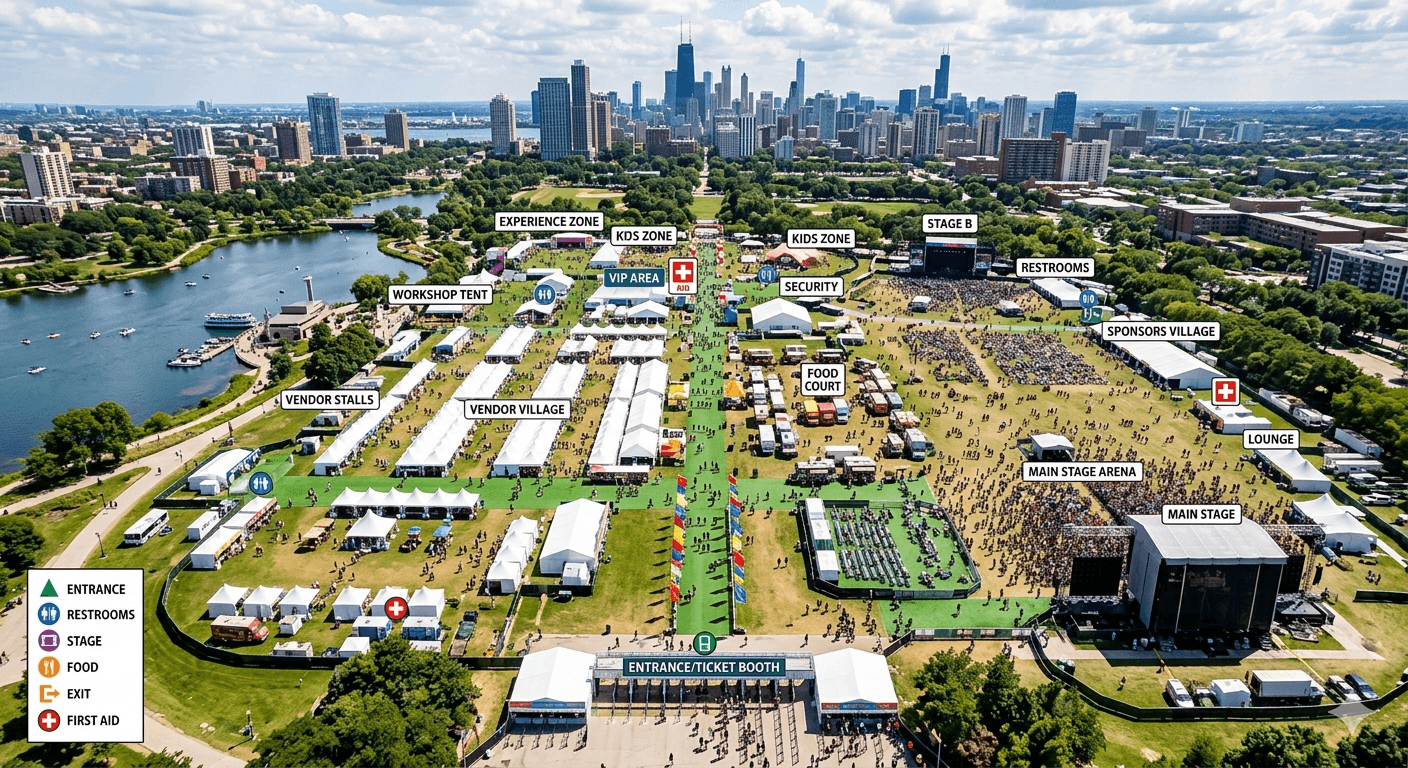
Planning an outdoor event is exciting — until the details pile up. Venue, layout, permits, weather, vendors — there is a lot to coordinate. This guide breaks down exactly how to plan and design an outdoor event so you can pull it off without the chaos.
Pick the Right Venue First
Everything flows from your location. Choose wrong and you are fighting uphill all day. Choose right and half your work is already done.
What to Look For in an Outdoor Venue
- Accessibility — parking, public transit, and ADA compliance
- Power and water hookups for vendors
- Natural shade or enough space for canopies and tents
- Flat, level surface — critical for booth setup and attendee safety
- Permit-friendly — parks and city plazas are often easier to work with than private land
Match Your Venue to Your Event Type
- Farmers markets work well in parking lots, parks, or downtown plazas
- Craft fairs need flat ground and easy vendor load-in access
- Community festivals benefit from parks with existing restrooms and infrastructure
Design Your Layout and Flow
How you arrange the space determines how people move — and how much they engage with vendors. Poor layout creates dead zones. Good layout creates natural flow and higher vendor sales.
Vendor and Booth Placement Strategy
- Put high-draw vendors — food, fresh produce — near the entrance to pull people in immediately
- Use a loop or grid layout so attendees naturally pass every booth
- Leave at least 10-12 feet between booth rows for comfortable foot traffic
- Group similar vendors by category — food row, craft section, produce alley
Guide Foot Traffic Intentionally
- Place your main stage or focal point at the far end — it pulls people through the full event
- Post directional signs at every entry point and major intersection
- Keep emergency exit paths clear, marked, and never blocked by vendor booths
Build Your Vendor Lineup
Your vendors are the event. Use vendor application templates to collect booth size, power needs, and product categories upfront. Running a farmers market? A farmers market vendor application makes intake smooth. For craft events, a craft fair vendor application keeps your product mix on-brand. List your event where vendors actively find vendor opportunities to attract quality applicants.
Sort Out Permits and Safety
- Special event permits — most cities require them for public gatherings over a certain size
- Food handler permits — required if you have food vendors selling directly to the public
- Noise permits — check local ordinances especially for events with live music or amplified sound
- General liability insurance — protects you if something goes wrong on site
Plan for Weather
Weather is the one thing you cannot control — but you can prepare for it. Have a clear rain threshold before you decide to postpone or cancel. Communicate it to vendors in advance. Make sure your vendor agreements address weather-related cancellations so there are no disputes.
- Book a backup indoor venue for small events if possible
- Require vendors to bring their own tent weights — stakes alone are not enough in wind
- Set up a weather communication plan — email, text, or social post ready to go
Lighting and Signage
For daytime events, natural light is your friend. For evening events, string lights and portable LED fixtures make a huge difference in atmosphere and safety. Signage should be visible from the road, at every entrance, and at key decision points inside the event.
Day-Of Logistics Checklist
- Arrive 90+ minutes before vendor setup begins
- Walk the full site and confirm power, water, and facilities are operational
- Check in vendors against your confirmed list as they arrive
- Have a point person for vendor questions so you can focus on the big picture
Good market management software — or purpose-built farmers market software — handles vendor check-in, communications, and booth assignments in one place. And if you are newer to running events, our guide on how to host a vendor market covers the full playbook.
Ready to manage your market without the headaches? Events Near Me is free to get started — built for market organizers who want to spend less time on admin and more time on the market floor.